
Former Stafford County Owners by Record Era
Stafford County's paper trail runs through an online index, clerk-held books, plats, and archived microfilm. The state access portal leaves availability to each clerk. Stafford publishes no clear online start year or image cutoff. The Library of Virginia catalog is different. It names specific book and reel ranges for Stafford deed records. Those dates describe what survives on the shelf. They do not promise full coverage, and some pages may be too faint to read.
| Source | Years It Covers | Where Held | What It Shows |
|---|---|---|---|
| Virginia SRA / clerk index | Exact Stafford online start year not verified | Virginia SRA and Circuit Court Clerk | Indexed parties, instrument references, and available images |
| Stafford deed books and libers | Cataloged holdings include 1699-1709, 1722-1728, and 1754-1789 ranges | Library of Virginia catalog and clerk books | Earlier conveyances, with some legibility and loss limits |
| Will Book R and estate accounts | 1865-1929; estate accounts 1852-1921 | Library of Virginia Stafford collection | Fiduciary context for transfers through estates |
| Recorded subdivision plats | Depends on the recorded plat and parcel history | Circuit Court Clerk and county OnBase | Lot, section, easement, and parent-tract clues |
Begin with the newest deed covering the current parcel. Follow its prior reference to the earlier transfer. When the index stops, move to the clerk's books. Also check the Library of Virginia's Stafford catalog. A deed that names an estate points to the will or fiduciary record. A deed citing a parent tract points to the recorded plat. That plat carries an earlier map key. The Stafford County deed records route covers requesting a single instrument. This former-owner path follows many instruments backward.
Stafford County SRA Coverage Needs Confirmation
Virginia's Secure Remote Access portal opens a statewide path into local deed indexes. Read the terms closely. A clerk can turn on index-only access. Document images may stay restricted behind a signed subscriber agreement and fees. Stafford's own index start year and image terms rest with the clerk. Confirm transfer coverage before trusting a blank screen. No result does not mean no deed. It may simply mean the index has limits.
Names trip up searches in quiet ways. A party may appear under initials. The same person may show up as a spelling variant, an entity ending, a married name, a trustee, or an estate caption. Pull up the current grantee first. Then chase the prior deed reference to surface the earlier grantor. Match every legal description and map number before stepping back another generation. When an image is missing online, give the clerk's Land Records Division the instrument reference. Staff can point to the right book or copy route. Start with the Virginia SRA land-record entry for the local grantor-grantee index.
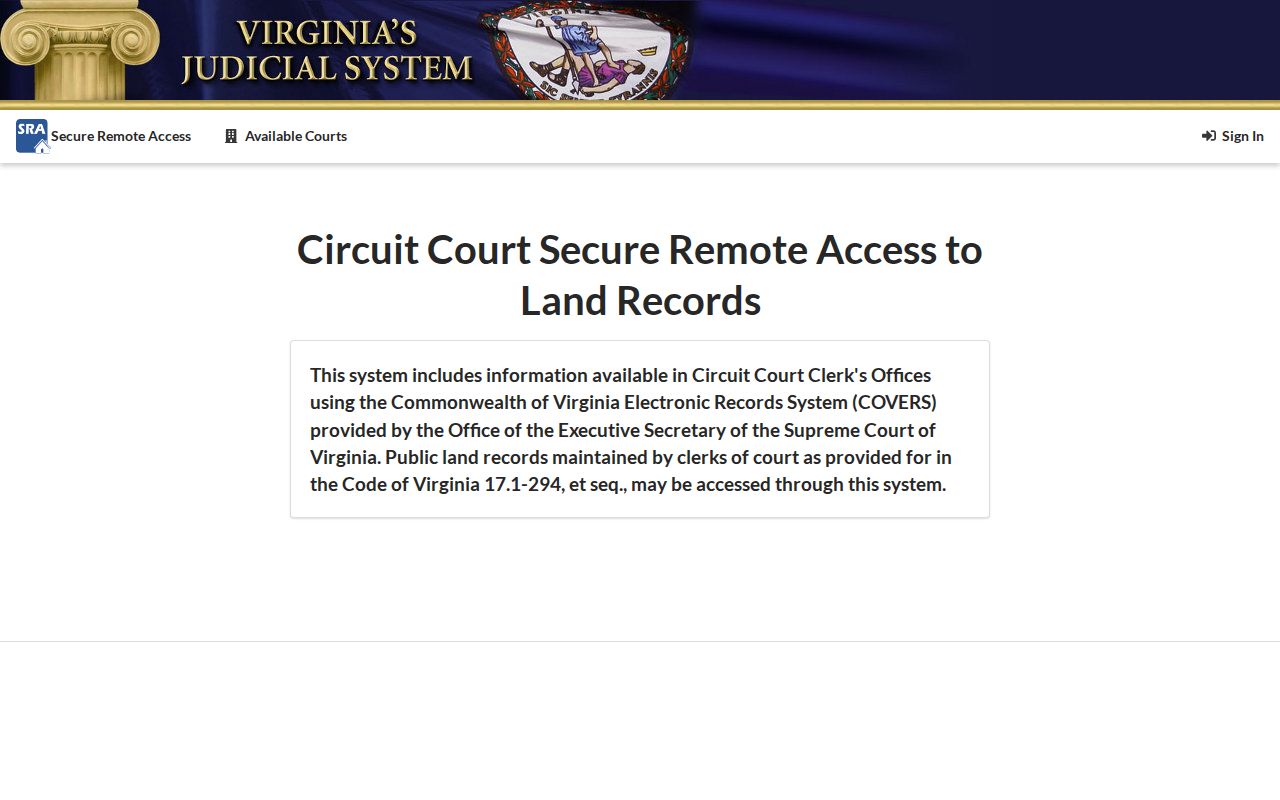
The page displayed covers the whole state. Stafford's cutoff date and image availability still require a call to the clerk.
Walk the Stafford County Deed Chain Backward
Walk the chain from the newest deed backward. Start with the instrument that actually describes the parcel, not just a current owner's name. That deed's grantee becomes your next grantor as you move to the older transfer. The derivation clause, prior reference, and land description in each instrument point you to the next step. They anchor each move back in time. Older deeds often covered a larger parcel than today's assessment record shows. Pay attention to the lot, section, map key, and parent tract.
- Locate the newest deed that described the parcel and note its grantee, date, and reference.
- Read the cited prior deed and identify its grantor and legal description.
- Search that earlier grantee and compare the tract, plat, and tax-map clues.
- Repeat until the index stopped, then ask the clerk or catalog for the older volume.
- Grantor
- The party that transferred an interest in that instrument.
- Grantee
- The party that received the stated interest.
- Chain of title
- The ordered sequence of recorded transfers for the same land.
- Legal description
- The land text used to test whether each older deed covered the parcel.
Stafford Historic Deeds Carry Civil War Gaps
Stafford's historic deeds carry real gaps. The Library of Virginia's Stafford catalog flags court-record loss from Union vandalism during the Civil War. So a missing deed-book page may reflect a genuine break rather than a misspelled name or bad scan. The catalog lists Deed Book 1722 through 1728. It also lists Liber P from 1754 through 1765, with only 1754 through 1761 legible. Liber S covers 1780 through 1789, and Liber Z runs from 1699 through 1709. Each qualifier shapes how far an old chain can honestly reach.
Volume labels matter too. Some books are originals, while others are transcripts or copies. A transcript preserves text but is not the original instrument. A catalog's date range never promises that every page survived. The catalog also lists Will Book R from 1865 through 1929. It lists estate accounts from 1852 through 1921. Probate materials like these can bridge a chain that dead-ends at a decedent or fiduciary. When a link stays missing, mark it unresolved. Never fill the gap with a same-name guess. The Library of Virginia Stafford catalog identifies the book ranges and the historic loss note.
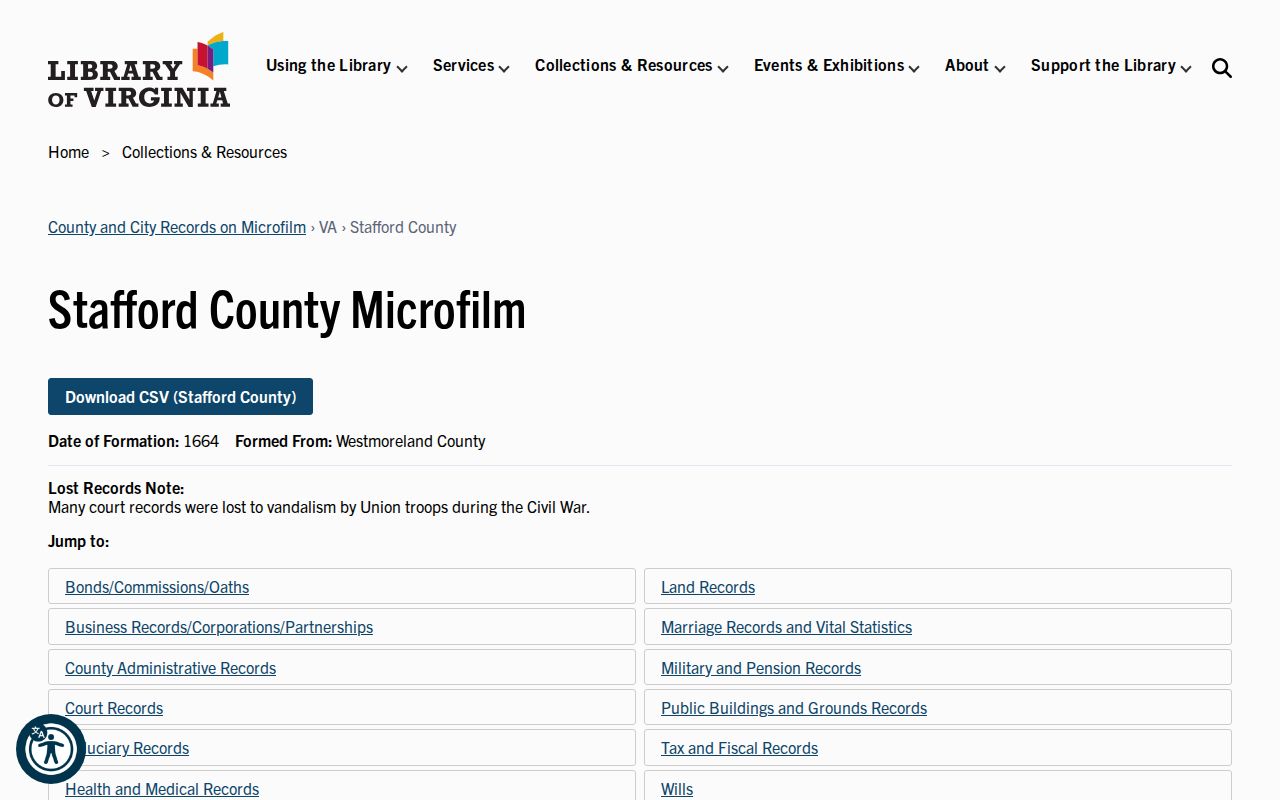
Ask for an older Stafford volume by its title and reel number, and note whether you want the original, a transcript, or a copy.
Stafford Parcel Splits Changed Old Map Keys
Hunting for a former owner can stall. The newest deed cites a parent tract or subdivision lot rather than the current parcel. Stafford planning records help close that gap. They track parcel splits and combinations, address assignments, tax-map corrections, and GIS file review. Condominium range and map numbers sometimes disagree with the older key written in a deed. Keep both identifiers. Then use the plat name, lot, section, and recording citation to bridge the two.
Digital plats explain a common puzzle. An older Stafford deed describes more land than the parcel on today's tax roll. The county requires submitted CAD or ESRI data in Virginia State Plane North, NAD 83 HARN. That data must carry road names, lot numbers, and coordinate control. A plan comment or rejected file signals only a review step. It is not a completed transfer. The recorded plat and the deed together fix a historical link. It runs between the parent tract and the tax parcels that followed.
Stafford Probate Files Bridged Estate Transfers
Probate bridged estate transfers. When an older deed named an executor, administrator, trustee, life tenant, or estate, the next land transfer could hinge on a will or fiduciary appointment. The Circuit Court Clerk kept the local probate and fiduciary records. The Library of Virginia catalogs Stafford wills and estate accounts, a useful resource when a deed chain ends at an estate caption. Search the decedent and fiduciary names. Then compare the will's devise with a later distribution or executor's deed.
Vital records and property records serve different purposes. Virginia birth certificates open after 100 years. Death, marriage, and divorce records open after 25. Certified copies before those windows generally require immediate-family eligibility and valid identification, with limited exceptions. The current $15 fee took effect July 1, 2026. A death record can verify an event for an eligible requester. But only a deed or probate instrument connects that event to a transfer of Stafford land.
Stafford County Name Variants Change Searches
Search names as recorded. Initials, middle names, spelling differences, married names, company captions, and fiduciary roles can all affect an index search of Stafford County property records. Search both party roles. Keep the exact spelling from each deed citation. A similar name alone proves nothing. A result belongs in the chain only when its legal description, parcel context, or referenced prior instrument also fits.
For an estate, compare the decedent's name with the executor, administrator, trustee, or other party who signs the later conveyance. For a business, keep the recorded entity caption and check its public filing separately. These steps locate candidate records. They prove nothing by themselves. If the name trail breaks, record the alternate forms tested and ask the clerk about the index terms available for that volume.
How Far Stafford County Owner Records Reached
The online chain has no stated start year. No fixed cutoff applies. The earliest catalog material reaches Liber Z, covering 1699 through 1709, alongside other deed books, wills, and estate accounts. That range is archival. It does not prove an unbroken title chain survived from that date. Gaps can stem from Civil War loss, a transcript, a parent tract, a name variant, or the clerk's online access boundary.
A modern search sometimes stops. Note the last instrument, inspect its prior reference, search both party roles, and compare the legal description and plat. Then ask the clerk or Library of Virginia about the older book. Estate records help when a fiduciary held the land. Trace owners only as far as evidence allows. An old same-name entry needs a land-description match before it joins the chain.
Lawful use. Historical ownership records support house history, title research, and property diligence. Do not use a former owner's name to track, threaten, or harass a living person.